Why Seasonal Clothing Storage Matters
Storing seasonal clothes properly keeps your closet manageable and helps garments stay clean, fresh, and ready to wear. It also reduces clutter, makes it easier to find what you need, and protects clothing from dust, moisture, pests, and unnecessary wear.
A good storage system does not need to be expensive or complicated. The most important steps are cleaning clothes before storage, choosing suitable containers, using space wisely, and labeling everything clearly.
Start by Sorting Your Clothes
Before packing anything away, sort your clothing into simple groups. This helps you avoid storing items you no longer wear and makes unpacking easier later.
Create piles for:
– Keep for next season
– Donate or give away
– Repair or alter
– Recycle or discard
– Unsure
Be realistic when deciding what to keep. If a garment no longer fits, feels uncomfortable, or has not been worn for several seasons, it may not be worth taking up storage space. Set aside items that need repairs so they do not get forgotten in a storage box.
You can also sort clothes by type, such as sweaters, coats, swimwear, seasonal accessories, and special-occasion clothing. Grouping similar items helps you choose the right storage method for each category.
Clean Everything Before Storage
Always clean clothes before storing them, even if they appear clean. Small amounts of body oil, food, sweat, or dirt can leave stains or attract pests over time. Odors can also become stronger when clothing remains packed away for months.
Follow the care label on each garment. Wash or dry-clean items as recommended, and make sure everything is completely dry before packing. Slightly damp clothing can develop musty odors or mildew in enclosed containers.
For special items:
– Empty all pockets.
– Remove temporary stains before they set.
– Brush off dirt from coats and jackets.
– Clean shoes before storing them.
– Allow freshly cleaned clothing to air out before packing.
Avoid storing clothing immediately after using fabric softener or strong fragrance products if the items will be in sealed containers. A neutral, clean fabric is usually best for long-term storage.
Choose the Right Storage Containers
The best container depends on the type of clothing, the available space, and how often you need to access the items.
Plastic Bins
Plastic bins with secure lids are useful for folded clothing, accessories, and items stored in basements, garages, or attics. They protect garments from dust and provide some protection against moisture.
Choose clear bins when possible so you can see the contents without opening every container. If you use opaque bins, add a large label to the outside.
Do not overfill bins. Clothes need enough room to avoid heavy creasing, and tightly packed containers can make fabrics difficult to remove without pulling or stretching them.
Fabric Storage Bags
Breathable fabric bags work well for sweaters, coats, and other items that benefit from airflow. Cotton or canvas bags are often better than tightly sealed plastic bags for natural fibers.
Fabric bags should be stored in a clean, dry area. They offer less protection from water and pests than hard containers, so they may not be ideal for damp storage spaces.
Vacuum Storage Bags
Vacuum bags can save space, especially for bulky items such as puffer jackets, blankets, and thick sweaters. However, they are not suitable for every fabric.
Avoid compressing leather, fur, structured garments, and delicate items for long periods. Compression can affect their shape or finish. For down-filled items, long-term compression may also reduce their loft. Always check the care instructions before using vacuum storage bags.
Garment Bags
Use breathable garment bags for suits, dresses, coats, and other pieces that should remain hanging. Avoid keeping clothing in the thin plastic covers that often come from a dry cleaner. These covers are designed for short-term transport, not extended storage.
Fold Clothing Correctly
Fold heavier items rather than hanging them for long periods. Sweaters, knitwear, and heavy jackets can stretch at the shoulders when left on hangers.
Use these folding tips:
– Fold sweaters loosely to protect their shape.
– Place heavier garments at the bottom of a container.
– Keep lighter fabrics on top.
– Avoid sharp folds on delicate materials.
– Use acid-free tissue paper for fragile or special garments.
– Do not cram clothing into drawers or bins.
For items that wrinkle easily, fold along natural seams and place a layer of tissue paper between garments. This can reduce friction and help prevent deep creases.
Store Shoes and Accessories Separately
Shoes should be clean and fully dry before storage. Stuff boots and tall shoes with rolled paper or boot supports to help them maintain their shape. Avoid newspaper if the ink may transfer to the material.
Store shoes in their original boxes, individual fabric bags, or a separate labeled container. Do not pile shoes directly on top of clothing, since dirt, polish, or stiff edges may damage fabric.
Accessories such as scarves, gloves, hats, and belts can be grouped in small containers or fabric organizers. Keep matching sets together, and use smaller bags inside a larger bin to prevent items from becoming tangled.
Use Space Efficiently
A well-planned storage location can free up valuable closet space. Consider areas such as:
– The top shelf of a closet
– Under the bed
– A clean wardrobe or cabinet
– Shelves in a dry storage room
– The back of a closet
Keep storage containers off the floor when possible, especially in areas that may experience temperature changes or moisture. Shelving units, risers, and under-bed boxes can help use vertical and hidden space.
Do not place heavy bins where they are difficult or unsafe to lift. Store frequently used items in easy-to-reach locations and less-used clothing in higher or farther areas.
Label Every Container
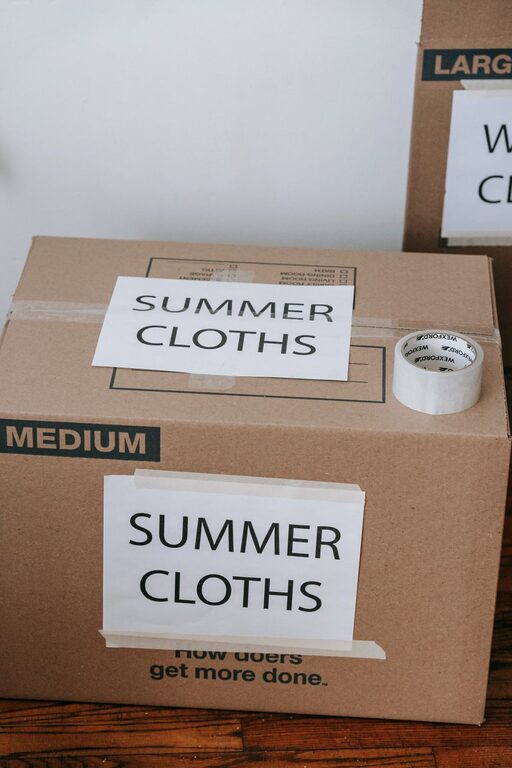
Clear labels make seasonal changes much faster. Write the contents and the season on each box, such as “Winter sweaters” or “Summer accessories.”
For even better organization, include:
– Clothing types
– Size information for family members
– A note about delicate items
– The storage date
– A short list of missing or needed repairs
A simple inventory on your phone can also help. Take a quick photo of the contents before closing each bin and save it with the container label. This lets you check what is inside without opening several boxes.
Protect Clothing During Storage
Store seasonal clothing in a cool, dry, and stable environment. Avoid areas with direct sunlight, excessive heat, or frequent moisture. Sunlight can fade fabric, while heat and humidity may damage fibers and encourage unpleasant odors.
Check stored clothing occasionally, especially if the storage area has changing conditions. Look for moisture, unusual smells, or signs that containers are damaged. If you find a problem, remove the clothing, clean the container, and allow everything to dry completely before repacking.
Avoid placing strong-smelling products directly against clothing. If you use a scent product or pest-repellent item, choose one designed for clothing storage and follow its instructions. Keep such products separate from garments unless the packaging says otherwise.
Make Seasonal Changes Easier
When it is time to switch wardrobes, avoid pulling everything out at once. Work by category and replace similar items together. For example, remove swimwear and warm-weather accessories before bringing out sweaters and coats.
As you unpack, inspect each item. If something no longer fits, needs repair, or was not worn during the previous season, decide whether it should return to storage.
A simple rotation routine can keep the process manageable:
- Remove the upcoming season’s clothes.
- Clean and inspect them before placing them in the closet.
- Set aside items for donation or repair.
- Clean the outgoing season’s clothes.
- Pack and label them immediately.
- Place the containers in their assigned storage location.
With consistent sorting, cleaning, labeling, and careful container selection, seasonal clothing storage becomes a quick routine instead of a major chore. A little preparation helps your clothes last longer and keeps your home organized throughout the year.
About the Author